
CAT DILR

CAT Networks and Routes Questions with Solutions

Network sets show links between places or people and ask for flows, routes or shortest paths.

At least 1.3 Networks and Routes questions per paper since CAT 2021. This page draws on 31 Networks and Routes questions from official CAT papers, 2006–2024. Some questions carry only a broad topic tag, so the real rate can be higher.

Networks and Routes questions in CAT by year

Counts questions tagged Networks and Routes. A year with few or none may still have them under a broader tag.

YearPapersQuestionsPer paper
CAT 2025300
CAT 2024242
CAT 2023351.7
CAT 2022284
CAT 2021300

How to approach Networks and Routes

Trace the flow through each node. What enters a node must leave it.

Solved Networks and Routes questions

Real questions from past CAT papers, each with its answer and solution.

DILR · Networks and Routes

Set

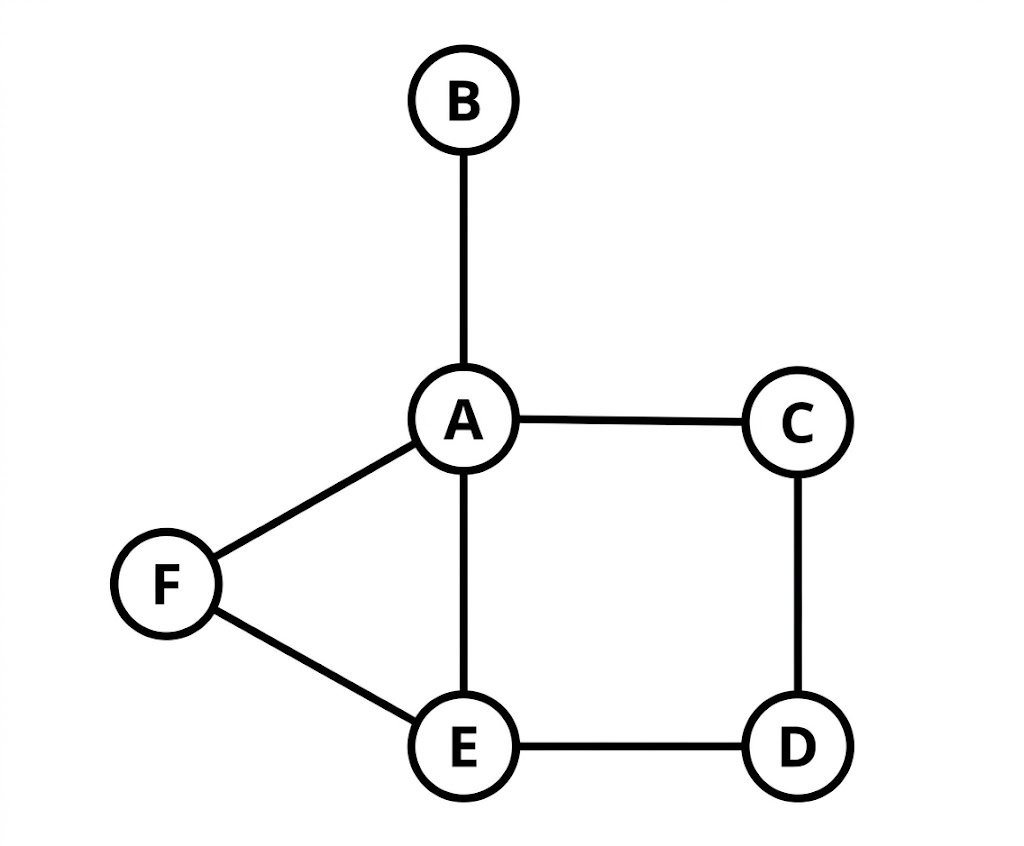
A, B, C, D, E, and F are the six police stations in an area, which are connected by streets as shown below. Four teams - Team 1, Team 2, Team 3 and Team 4 patrol these streets continuously between 09:00 hrs. and 12:00 hrs. each day.

[See network diagram in image: Stations A, B, C, D, E, F with connections F-A, F-E, A-B, A-E, A-C, E-D, C-D]

The teams need 30 minutes to cross a street connecting one police station to another. All four teams start from Station A at 09:00 hrs. and must return to Station A by 12:00 hrs. They can also pass via Station A at any point on their journeys.

The following facts are known.
  1. None of the streets has more than one team traveling along it in any direction at any point in time.
  2. Teams 2 and 3 are the only ones in stations E and D respectively at 10:00 hrs.
  3. Teams 1 and 3 are the only ones in station E at 10:30 hrs.
  4. Teams 1 and 4 are the only ones in stations B and E respectively at 11:30 hrs.
  5. Team 1 and Team 4 are the only teams that patrol the street connecting stations A and E.
  6. Team 4 never passes through Stations B, D or F.
DILR set, figure 1

CAT 2023 Slot 3, question 1 · MCQ

Which one among the following stations is visited the largest number of times?
  1. A.
    Station F
  2. B.
    Station D
  3. C.
    Station E
    ✓ Correct
  4. D.
    Station C
Solution
Only two schedules satisfy every condition. They differ only in Team 2's path:
  • Team 1: A → B → A → E → A → B → A
  • Team 2: A → F → E → F → A → F → A, or A → F → E → F → E → F → A
  • Team 3: A → C → D → E → D → C → A
  • Team 4: A → E → A → C → A → E → A
How we get them:
  1. Team 3 is at D at 10:00 and at E at 10:30, so it crosses D → E between 10:00 and 10:30. From A, it reaches D in two steps only through C (A → C → D).
  2. Team 2 is at E at 10:00. It cannot use street A–E (fact 5), and street D–E is taken by Team 3 from 10:00, so Team 2 reaches E through F (A → F → E) and leaves E towards F.
  3. Team 1 is at E at 10:30 and at B at 11:30. B touches only A, so Team 1 goes E → A → B and then back to A. It reaches E at 10:30 by A → E, so before that it is A → B → A.
  4. Team 4 never visits B, D or F, so it moves only on A–C and A–E. It is at E at 11:30. Team 1 uses A–E from 10:00 to 11:00, so Team 4 is at A at 10:00 and at A at 11:00: A → E → A → C → A → E → A.
  5. Team 3 must return to A by 12:00 without street A–E, and E–F, A–F are used by Team 2. So it goes back E → D → C → A.
Visits to each station (start and end at A not counted):
  • E: Team 1 once, Team 2 once or twice, Team 3 once, Team 4 twice = 5 or 6
  • C: Team 3 twice, Team 4 once = 3
  • F: Team 2 two or three times
  • D: Team 3 twice = 2
Station E is visited the most times.

CAT 2023 Slot 3, question 2 · TITA (type in the answer)

How many times do the teams pass through Station B in a day?

Answer: 2

Solution
Only two schedules satisfy every condition. They differ only in Team 2's path:
  • Team 1: A → B → A → E → A → B → A
  • Team 2: A → F → E → F → A → F → A, or A → F → E → F → E → F → A
  • Team 3: A → C → D → E → D → C → A
  • Team 4: A → E → A → C → A → E → A
How we get them:
  1. Team 3 is at D at 10:00 and at E at 10:30, so it crosses D → E between 10:00 and 10:30. From A, it reaches D in two steps only through C (A → C → D).
  2. Team 2 is at E at 10:00. It cannot use street A–E (fact 5), and street D–E is taken by Team 3 from 10:00, so Team 2 reaches E through F (A → F → E) and leaves E towards F.
  3. Team 1 is at E at 10:30 and at B at 11:30. B touches only A, so Team 1 goes E → A → B and then back to A. It reaches E at 10:30 by A → E, so before that it is A → B → A.
  4. Team 4 never visits B, D or F, so it moves only on A–C and A–E. It is at E at 11:30. Team 1 uses A–E from 10:00 to 11:00, so Team 4 is at A at 10:00 and at A at 11:00: A → E → A → C → A → E → A.
  5. Team 3 must return to A by 12:00 without street A–E, and E–F, A–F are used by Team 2. So it goes back E → D → C → A.
Only Team 1 visits Station B: at 09:30 and at 11:30. No other team goes to B.

The teams pass through Station B 2 times.

CAT 2023 Slot 3, question 3 · MCQ

Which team patrols the street connecting Stations D and E at 10:15 hrs?
  1. A.
    Team 4
  2. B.
    Team 1
  3. C.
    Team 3
    ✓ Correct
  4. D.
    Team 2
Solution
Only two schedules satisfy every condition. They differ only in Team 2's path:
  • Team 1: A → B → A → E → A → B → A
  • Team 2: A → F → E → F → A → F → A, or A → F → E → F → E → F → A
  • Team 3: A → C → D → E → D → C → A
  • Team 4: A → E → A → C → A → E → A
How we get them:
  1. Team 3 is at D at 10:00 and at E at 10:30, so it crosses D → E between 10:00 and 10:30. From A, it reaches D in two steps only through C (A → C → D).
  2. Team 2 is at E at 10:00. It cannot use street A–E (fact 5), and street D–E is taken by Team 3 from 10:00, so Team 2 reaches E through F (A → F → E) and leaves E towards F.
  3. Team 1 is at E at 10:30 and at B at 11:30. B touches only A, so Team 1 goes E → A → B and then back to A. It reaches E at 10:30 by A → E, so before that it is A → B → A.
  4. Team 4 never visits B, D or F, so it moves only on A–C and A–E. It is at E at 11:30. Team 1 uses A–E from 10:00 to 11:00, so Team 4 is at A at 10:00 and at A at 11:00: A → E → A → C → A → E → A.
  5. Team 3 must return to A by 12:00 without street A–E, and E–F, A–F are used by Team 2. So it goes back E → D → C → A.
Team 3 is at D at 10:00 and at E at 10:30, so it is on street D–E between 10:00 and 10:30. Fact 1 allows only one team on a street at a time, so no other team can be on it.

At 10:15, Team 3 patrols the street connecting D and E.

Papers with the most Networks and Routes questions

See whether Networks and Routes questions are costing you marks

Sit a paper under the real timer, and Catalyst sorts every question by topic: where you are accurate, where you are slow, and what to skip. The free mock test needs no payment.

Frequently asked questions

How many Networks and Routes questions come in CAT?
At least 1.3 per paper, counted across the 13 papers from CAT 2021 onward. Catalyst holds 31 Networks and Routes questions in all, from 6 papers between 2006 and 2024. Some questions carry only a broad topic tag, so the real figure can be higher.
How often does CAT test Networks and Routes?
Questions on Networks and Routes were tagged in at least 4 of the 13 papers since CAT 2021. Weigh it against your stronger topics, and use your own results to decide how long to spend on it.
Are Networks and Routes questions type-in or multiple choice?
Both. 6 of the 31 Networks and Routes questions on Catalyst are TITA (you type the answer, and there is no negative mark). The rest are multiple choice, worth +3 for a correct answer and -1 for a wrong one.
How do I practise CAT Networks and Routes questions?
Trace the flow through each node. What enters a node must leave it. Then sit real papers under the exam's timer, because timing is what changes on the day. Catalyst sorts your attempts by topic and shows where you are losing marks.