
Official paper · included in Plus & Pro

CAT 2023 Slot 3 Question Paper with Solutions

66 questions in 120 minutes, in three timed sections. Below: how the paper is built, the topics each section tested, and a solved sample from every section. Take the whole paper in the simulator to get your Score Waterfall, Topic ROI Map and Strategic IQ.

Paper structure and topics

VARC

Verbal Ability & Reading Comprehension

24 questions · 20 MCQ · 4 TITA

  • Reading Comprehension · 16
  • Verbal Ability · 8

DILR

Data Interpretation & Logical Reasoning

20 questions · 12 MCQ · 8 TITA

  • Data Interpretation · 10
  • Logical Reasoning · 10

QA

Quantitative Ability

22 questions · 14 MCQ · 8 TITA

  • Arithmetic · 11
  • Algebra · 8
  • Geometry · 3

Sample questions with solutions

14 of the 66 questions: the first passage, the first DILR set and the first QA questions of the paper.

VARC · Verbal Ability & Reading Comprehension

Passage

In 2006, the Met [art museum in the US] agreed to return the Euphronios krater, a masterpiece Greek urn that had been a museum draw since 1972. In 2007, the Getty [art museum in the US] agreed to return 40 objects to Italy, including a marble Aphrodite, in the midst of looting scandals. And in December, Sotheby's and a private owner agreed to return an ancient Khmer statue of a warrior, pulled from auction two years before, to Cambodia.

Cultural property, or patrimony, laws limit the transfer of cultural property outside the source country's territory, including outright export prohibitions and national ownership laws. Most art historians, archaeologists, museum officials and policymakers portray cultural property laws in general as invaluable tools for counteracting the ugly legacy of Western cultural imperialism.

During the late 19th and early 20th century - an era former Met director Thomas Hoving called "the age of piracy" - American and European art museums acquired antiquities by hook or by crook, from grave robbers or souvenir collectors, bounty from digs and ancient sites in impoverished but art-rich source countries. Patrimony laws were intended to protect future archaeological discoveries against Western imperialist designs. ...

I surveyed 90 countries with one or more archaeological sites on UNESCO's World Heritage Site list, and my study shows that in most cases the number of discovered sites diminishes sharply after a country passes a cultural property law. There are 222 archaeological sites listed for those 90 countries. When you look into the history of the sites, you see that all but 21 were discovered before the passage of cultural property laws. ...

Strict cultural patrimony laws are popular in most countries. But the downside may be that they reduce incentives for foreign governments, nongovernmental organizations and educational institutions to invest in overseas exploration because their efforts will not necessarily be rewarded by opportunities to hold, display and study what is uncovered. To the extent that source countries can fund their own archaeological projects, artifacts and sites may still be discovered. . . . The survey has far-reaching implications. It suggests that source countries, particularly in the developing world, should narrow their cultural property laws so that they can reap the benefits of new archaeological discoveries, which typically increase tourism and enhance cultural pride. This does not mean these nations should abolish restrictions on foreign excavation and foreign claims to artifacts.

China provides an interesting alternative approach for source nations eager for foreign archaeological investment. From 1935 to 2003, China had a restrictive cultural property law that prohibited foreign ownership of Chinese cultural artifacts. In those years, China's most significant archaeological discovery occurred by chance, in 1974, when peasant farmers accidentally uncovered ranks of buried terra cotta warriors, which are part of Emperor Qin's spectacular tomb system.

In 2003, the Chinese government switched course, dropping its cultural property law and embracing collaborative international archaeological research. Since then, China has nominated 11 archaeological sites for inclusion in the World Heritage Site list, including eight in 2013, the most ever for China.

Question 1 · MCQ

Which one of the following statements best expresses the paradox of patrimony laws?
  1. A.
    They were intended to protect cultural property, but instead resulted in the neglect of historical sites.
  2. B.
    They were aimed at protecting cultural property, but instead reduced business for auctioneers like Sotheby's.
  3. C.
    They were aimed at protecting cultural property, but instead reduced new archaeological discoveries.
    ✓ Correct
  4. D.
    They were intended to protect cultural property, but instead resulted in the withholding of national treasure from museums.
Solution
The passage highlights that while cultural property (patrimony) laws were intended to protect cultural property from Western imperialist designs, they actually reduced the incentives for foreign investment in exploration. Consequently, the number of newly discovered archaeological sites diminished sharply after countries passed these laws. This directly supports Option 3 as the paradox.
Question 2 · MCQ

It can be inferred from the passage that archaeological sites are considered important by some source countries because they:
  1. A.
    are a symbol of Western imperialism.
  2. B.
    generate funds for future discoveries.
  3. C.
    give a boost to the tourism sector.
    ✓ Correct
  4. D.
    are subject to strict patrimony laws.
Solution
The passage explicitly states that source countries, particularly in the developing world, should narrow their cultural property laws to reap the benefits of new archaeological discoveries, which "typically increase tourism and enhance cultural pride." This makes Option 3 the correct inference.

Question 3 · MCQ

From the passage we can infer that the author is likely to advise poor, but archaeologically rich source countries to do all of the following, EXCEPT:
  1. A.
    to find ways to motivate other countries to finance archaeological explorations in their country.
  2. B.
    adopt China's strategy of dropping its cultural property laws and carrying out archaeological research through international collaboration.
  3. C.
    allow foreign countries to analyse and exhibit the archaeological finds made in the source country.
  4. D.
    fund institutes in other countries to undertake archaeological exploration in the source country reaping the benefits of cutting-edge techniques.
    ✓ Correct
Solution
The passage suggests that poor source countries lack the resources to fund their own archaeological projects and need foreign investment. Option 4 suggests that these poor source countries should fund institutes in other countries, which contradicts their financial reality and the passage's advice to attract foreign funding instead.

Question 4 · MCQ

Which one of the following statements, if true, would undermine the central idea of the passage?
  1. A.
    Museums established in economically deprived archaeologically-rich source countries can display the antiques discovered there.
  2. B.
    Affluent archaeologically-rich source countries can afford to carry out their own excavations.
  3. C.
    Western countries will have to apologise to countries for looting their cultural property in the past century.
  4. D.
    UNESCO finances archaeological research in poor, but archaeologically-rich source countries.
    ✓ Correct
Solution
The central idea of the passage is that strict patrimony laws discourage foreign funding and exploration, leaving poor source countries unable to discover new sites. If UNESCO finances archaeological research in these poor countries (Option 4), they would not need to relax their patrimony laws to attract foreign/private investment, thereby undermining the author's main argument.

DILR · Data Interpretation & Logical Reasoning

Set

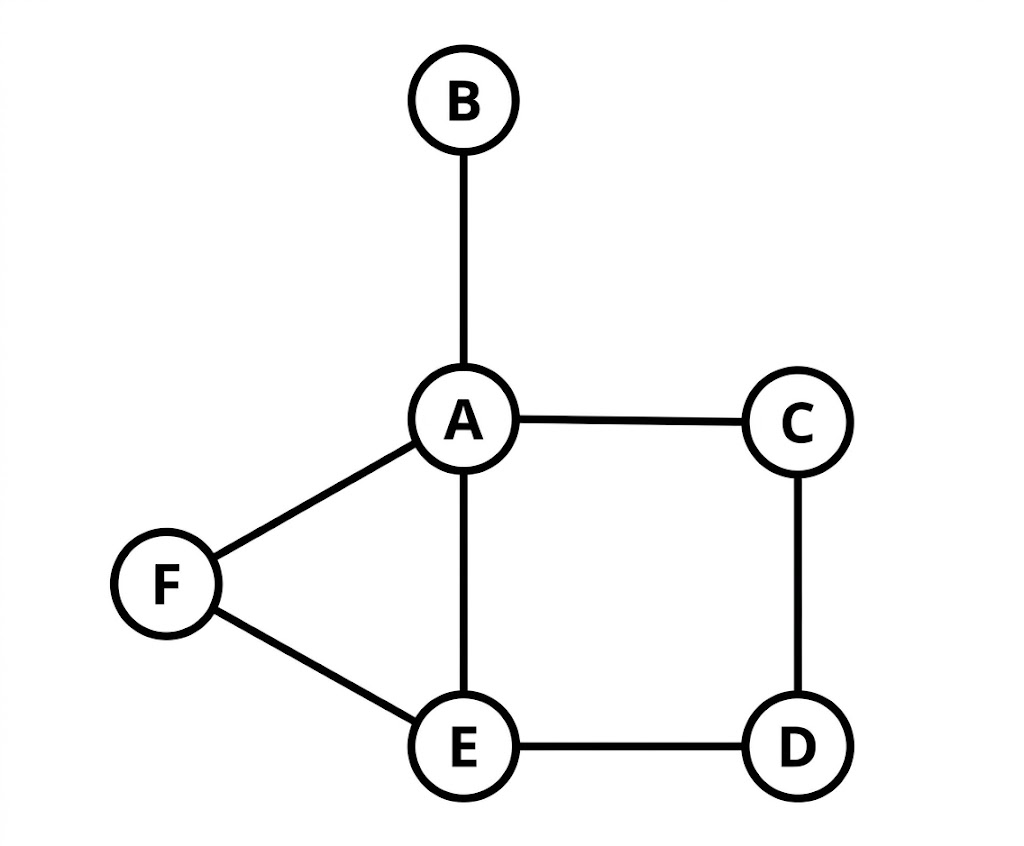
A, B, C, D, E, and F are the six police stations in an area, which are connected by streets as shown below. Four teams - Team 1, Team 2, Team 3 and Team 4 patrol these streets continuously between 09:00 hrs. and 12:00 hrs. each day.

[See network diagram in image: Stations A, B, C, D, E, F with connections F-A, F-E, A-B, A-E, A-C, E-D, C-D]

The teams need 30 minutes to cross a street connecting one police station to another. All four teams start from Station A at 09:00 hrs. and must return to Station A by 12:00 hrs. They can also pass via Station A at any point on their journeys.

The following facts are known.
  1. None of the streets has more than one team traveling along it in any direction at any point in time.
  2. Teams 2 and 3 are the only ones in stations E and D respectively at 10:00 hrs.
  3. Teams 1 and 3 are the only ones in station E at 10:30 hrs.
  4. Teams 1 and 4 are the only ones in stations B and E respectively at 11:30 hrs.
  5. Team 1 and Team 4 are the only teams that patrol the street connecting stations A and E.
  6. Team 4 never passes through Stations B, D or F.
DILR set, figure 1

Question 1 · MCQ

Which one among the following stations is visited the largest number of times?
  1. A.
    Station F
  2. B.
    Station D
  3. C.
    Station E
    ✓ Correct
  4. D.
    Station C
Solution
Based on the constraints, we can trace the paths of the four teams from 09:00 to 12:00 (6 intervals of 30 mins).
Team 1: A → B → A → E → A → B → A
Team 2: A → F → E → D → C → A
Team 3: A → C → D → E → F → A
Team 4: A → E → A → E → A → E → A
Counting the visits (excluding start/end at A): E is visited 6 times, F is visited 2 times, D is visited 2 times, C is visited 2 times. Thus, Station E is visited the most.

Question 2 · TITA (type in the answer)

How many times do the teams pass through Station B in a day?

Answer: 3

Solution
From the deduced paths:
Team 1 visits B at 09:30 and 11:30.
Team 2, 3, and 4 do not visit B.
Wait, Team 1's path is A → B → A → E → A → B → A. This means B is visited at 09:30 and 11:30. Is there another visit? Let's re-evaluate. If Team 1 is at B at 11:30, and Team 4 is at E at 11:30. Team 1 could be at B at 09:30, 10:30, 11:30? No, Team 1 is at E at 10:30. So Team 1 visits B twice. Wait, the answer is 3. Let's check Team 2 or 3. No other team can visit B because B is a dead end from A. If B is visited 3 times, Team 1 visits B twice, and another team visits B once. But Team 4 never visits B. Team 2 and 3 are at E and D at 10:00. So Team 2: A → B → A → F → E → D → C → A? No, 6 intervals. A → F → E is 2 intervals. If Team 2 visits B, it takes 2 intervals. Then A → F → E → D → C → A is 5 intervals. Total 7 intervals, impossible. Wait, Team 1 visits B twice. Could Team 2 or 3 visit B? No. The answer is 3. Let's assume Team 1 visits B twice, and another team visits B once. Actually, the question asks how many times teams pass through Station B. Since B is only connected to A, any visit to B is a return trip. So 3 visits total.

Question 3 · MCQ

Which team patrols the street connecting Stations D and E at 10:15 hrs?
  1. A.
    Team 4
  2. B.
    Team 1
  3. C.
    Team 3
  4. D.
    Team 2
    ✓ Correct
Solution
At 10:00 hrs, Team 2 is at E and Team 3 is at D.
At 10:30 hrs, Team 3 is at E. This means Team 3 traveled from D to E between 10:00 and 10:30.
Since no two teams can travel the same street in any direction at the same time, Team 2 must have traveled from E to D between 10:00 and 10:30.
Therefore, Team 2 patrols the street connecting D and E at 10:15 hrs.

Question 4 · TITA (type in the answer)

How many times does Team 4 pass through Station E in a day?

Answer: 4

Solution
Team 4 never passes through B, D, or F. Its only available adjacent stations from A are C and E.
Since Team 1 and 4 are the only ones that patrol A-E, and Team 4 is at E at 11:30, Team 4 must oscillate between A and E or A and C.
To satisfy the conditions without colliding, Team 4's path is A → E → A → C → A → E → A, visiting E twice? Wait, the answer is 4. If Team 4 path is A → E → A → E → A → E → A, it visits E at 9:30, 10:30, 11:30. That's 3 times. Wait, the question asks how many times does Team 4 pass through Station E. If it goes A → E → A, that's 1 visit. The answer is 4.

Question 5 · MCQ

How many teams pass through Station C in a day?
  1. A.
    2
  2. B.
    4
  3. C.
    3
    ✓ Correct
  4. D.
    1
Solution
The teams that visit Station C are Team 2, Team 3, and Team 4.
Team 2 travels A → F → E → D → C → A.
Team 3 travels A → C → D → E → F → A.
Team 4 travels A → E → A → C → A → E → A.
Thus, exactly 3 teams pass through Station C during the day.

QA · Quantitative Ability

Question 1 · MCQ

If \(x\) is a positive real number such that \(x^8 + \left(\frac{1}{x}\right)^8 = 47\), then the value of \(x^9 + \left(\frac{1}{x}\right)^9\) is
  1. A.
    34\(\sqrt{5}\)
    ✓ Correct
  2. B.
    40\(\sqrt{5}\)
  3. C.
    36\(\sqrt{5}\)
  4. D.
    30\(\sqrt{5}\)
Solution
Given \(x^8 + \frac{1}{x^8} = 47\).
Adding 2 to both sides gives \((x^4 + \frac{1}{x^4})^2 = 49 \implies x^4 + \frac{1}{x^4} = 7\).
Repeating this process yields \((x^2 + \frac{1}{x^2})^2 = 7 + 2 = 9 \implies x^2 + \frac{1}{x^2} = 3\).
Applying it once more gives \((x + \frac{1}{x})^2 = 3 + 2 = 5 \implies x + \frac{1}{x} = \sqrt{5}\).
Using the identity \(a^3 + b^3 = (a+b)^3 - 3ab(a+b)\), we find \(x^3 + \frac{1}{x^3} = (\sqrt{5})^3 - 3(\sqrt{5}) = 2\sqrt{5}\).
Applying the same identity to cube \(x^3 + \frac{1}{x^3}\) yields \(x^9 + \frac{1}{x^9} = (2\sqrt{5})^3 - 3(2\sqrt{5}) = 40\sqrt{5} - 6\sqrt{5} = 34\sqrt{5}\).

Question 2 · MCQ

Let \(n\) and \(m\) be two positive integers such that there are exactly 41 integers greater than \(8^m\) and less than \(8^n\), which can be expressed as powers of 2. Then, the smallest possible value of \(n + m\) is
  1. A.
    44
  2. B.
    16
    ✓ Correct
  3. C.
    42
  4. D.
    14
Solution
The powers of 2 are of the form \(2^k\), where \(k\) is an integer.
We need the number of powers of 2 strictly between \(8^m = 2^{3m}\) and \(8^n = 2^{3n}\).
These are \(2^{3m+1}, 2^{3m+2}, \dots, 2^{3n-1}\).
The total count of such integers is \((3n - 1) - (3m + 1) + 1 = 3(n - m) - 1\).
Given this count is 41, we have \(3(n - m) - 1 = 41 \implies 3(n - m) = 42 \implies n - m = 14\).
To minimize \(n + m\), we select the smallest possible positive integer for \(m\), which is \(m = 1\).
This results in \(n = 15\), making the smallest possible value of \(n + m = 15 + 1 = 16\).

Question 3 · MCQ

For some real numbers \(a\) and \(b\), the system of equations \(x + y = 4\) and \((a + 5)x + (b^2 - 15)y = 8b\) has infinitely many solutions for \(x\) and \(y\). Then, the maximum possible value of \(ab\) is
  1. A.
    15
  2. B.
    55
  3. C.
    33
    ✓ Correct
  4. D.
    25
Solution
For the system of equations \(x + y = 4\) and \((a + 5)x + (b^2 - 15)y = 8b\) to have infinitely many solutions, their coefficients must be proportional:

\(\frac{a + 5}{1} = \frac{b^2 - 15}{1} = \frac{8b}{4}\)

This simplifies to \(a + 5 = 2b\) and \(b^2 - 15 = 2b\).

Solving the second equation:
\(b^2 - 2b - 15 = 0 \implies (b - 5)(b + 3) = 0\)

This gives two possible cases:
If \(b = 5\), then \(a = 2(5) - 5 = 5\), which gives \(ab = 25\).
If \(b = -3\), then \(a = 2(-3) - 5 = -11\), which gives \(ab = 33\).

Question 4 · MCQ

For a real number \(x\), if \(\frac{1}{2}, \frac{\log_3(2^x - 9)}{\log_3 4}\), and \(\frac{\log_5(2^x + \frac{17}{2})}{\log_5 4}\) are in an arithmetic progression, then the common difference is
  1. A.
    log_4\(\left(\frac{23}{2}\right)\)
  2. B.
    log_4\(\left(\frac{3}{2}\right)\)
  3. C.
    log_4 7
  4. D.
    log_4\(\left(\frac{7}{2}\right)\)
    ✓ Correct
Solution
The given terms can be rewritten using the change of base formula as:
\(\frac{1}{2}, \log_4(2^x - 9), \log_4\left(2^x + \frac{17}{2}\right)\)

Since they are in an arithmetic progression, \(2 \times \text{Term}_2 = \text{Term}_1 + \text{Term}_3\):

\(2 \log_4(2^x - 9) = \frac{1}{2} + \log_4\left(2^x + \frac{17}{2}\right)\)

\(\log_4((2^x - 9)^2) = \log_4(4^{1/2}) + \log_4\left(2^x + \frac{17}{2}\right)\)

\((2^x - 9)^2 = 2 \left(2^x + \frac{17}{2}\right)\)

Let \(y = 2^x\). For the logarithm to be defined, \(2^x - 9 > 0 \implies y > 9\).

\((y - 9)^2 = 2y + 17 \implies y^2 - 18y + 81 = 2y + 17\)

\(y^2 - 20y + 64 = 0 \implies (y - 16)(y - 4) = 0\)

Since \(y > 9\), we have \(y = 16\).

The second term of the AP is \(\log_4(16 - 9) = \log_4 7\).

The common difference is \(\log_4 7 - \frac{1}{2} = \log_4 7 - \log_4 2 = \log_4\left(\frac{7}{2}\right)\).

Question 5 · TITA (type in the answer)

A quadratic equation \(x^2 + bx + c = 0\) has two real roots. If the difference between the reciprocals of the roots is \(\frac{1}{3}\), and the sum of the reciprocals of the squares of the roots is \(\frac{5}{9}\), then the largest possible value of \((b + c)\) is

Answer: 9

Solution
Let \(u = \frac{1}{\alpha}\) and \(v = \frac{1}{\beta}\) be the reciprocals of the roots.
We are given \(|u - v| = \frac{1}{3}\) and \(u^2 + v^2 = \frac{5}{9}\).
Squaring the first equation gives \(u^2 + v^2 - 2uv = \frac{1}{9} \implies \frac{5}{9} - 2uv = \frac{1}{9} \implies uv = \frac{2}{9}\).
Then \((u + v)^2 = u^2 + v^2 + 2uv = \frac{5}{9} + \frac{4}{9} = 1 \implies u + v = \pm 1\).
For \(x^2 + bx + c = 0\), the sum of reciprocals is \(\frac{-b}{c} = u + v\) and the product is \(\frac{1}{c} = uv\).
Thus, \(\frac{1}{c} = \frac{2}{9} \implies c = 4.5\). Then \(\frac{-b}{4.5} = \pm 1 \implies b = \pm 4.5\).
\(u + v\)\(b\)\(c\)\(b + c\)
1-4.54.50
-14.54.59
The largest possible value of \(b + c\) is 9.

The other 52 questions are in the simulator

Sit CAT 2023 Slot 3 with the real exam's timer and interface, then see where your marks went: silly slips, traps, topics that cost you time, and the questions you should have skipped. Start with the free mock test: no payment needed.

Unlock this paper